
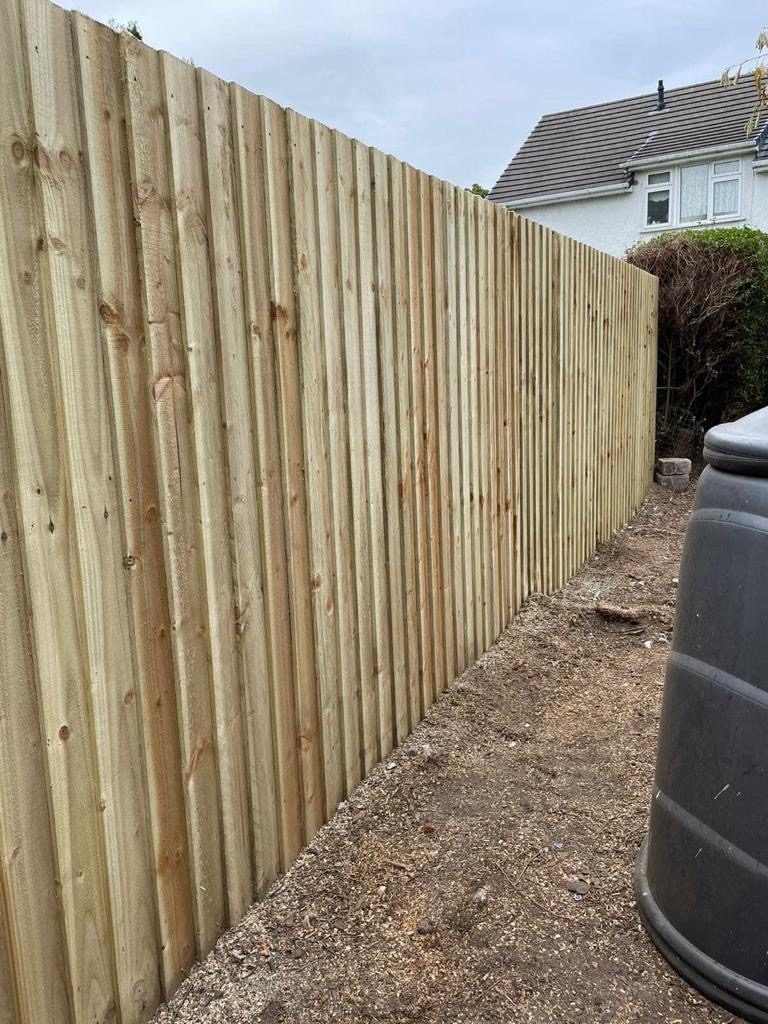
Fencing in Manchester
Panel and closeboard fencing across Manchester — long shared boundaries, screening between gardens, matching gates. Free, no-obligation quotes.
Get a Fast Response
Tell us a little about your garden and we'll come straight back to you on WhatsApp or by email.
Long Shared Boundaries in the Terraced Streets
Much of Chorlton, Withington and Didsbury is Victorian terraces and villas with long, narrow back gardens, and that makes fencing a different job here from a short run in a yard.
A single boundary can go the whole depth of the plot and touch two or three neighbours on the way down it.
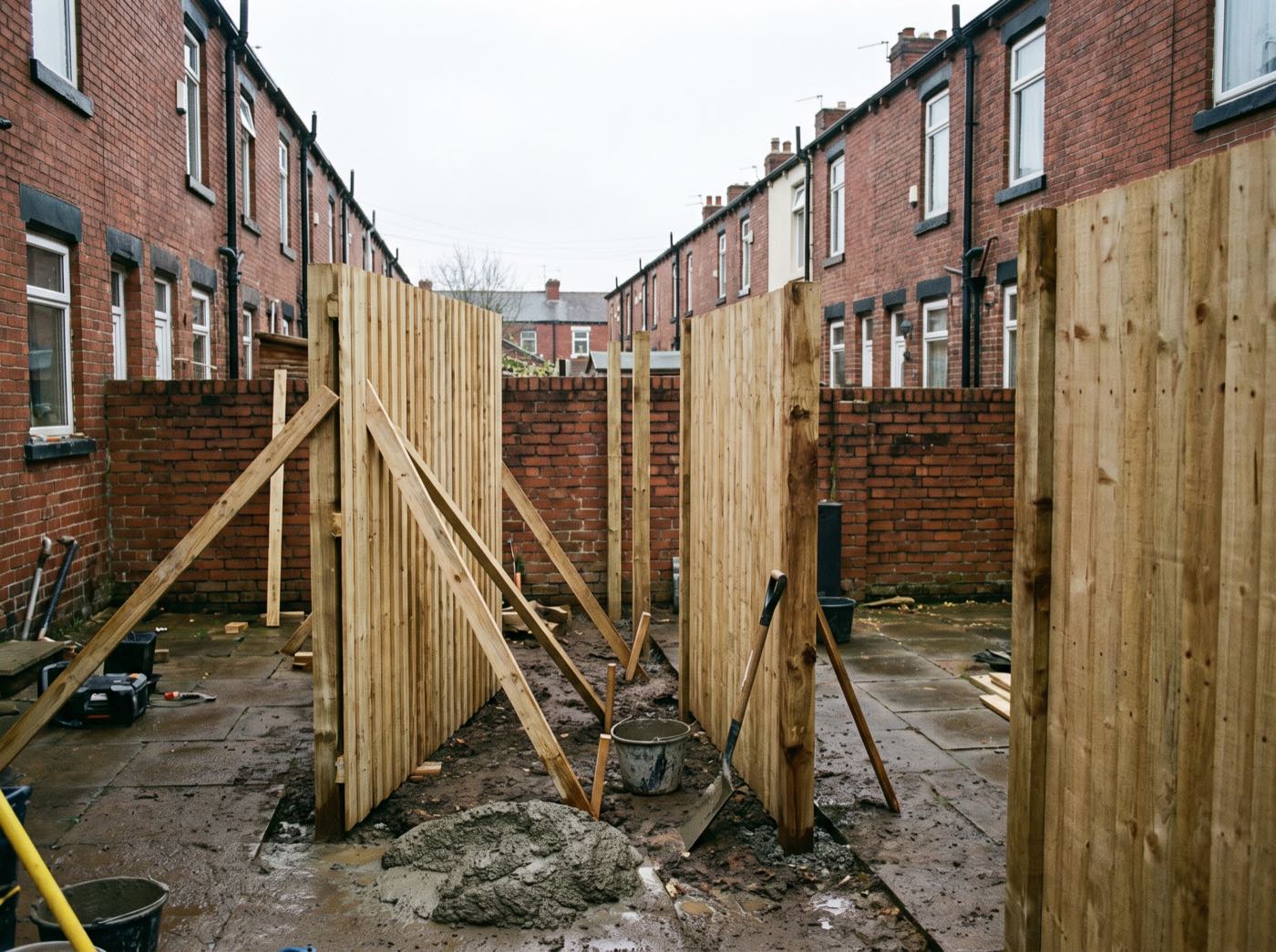
Length is what makes a run hard to get right. More metres means more posts, more spoil to carry out through a house with no side access, and a line that has to stay true over a long distance.
It is worth settling before the quote which stretch is yours and how much of what is standing now is coming out.
Screening Where Gardens Back Onto Each Other
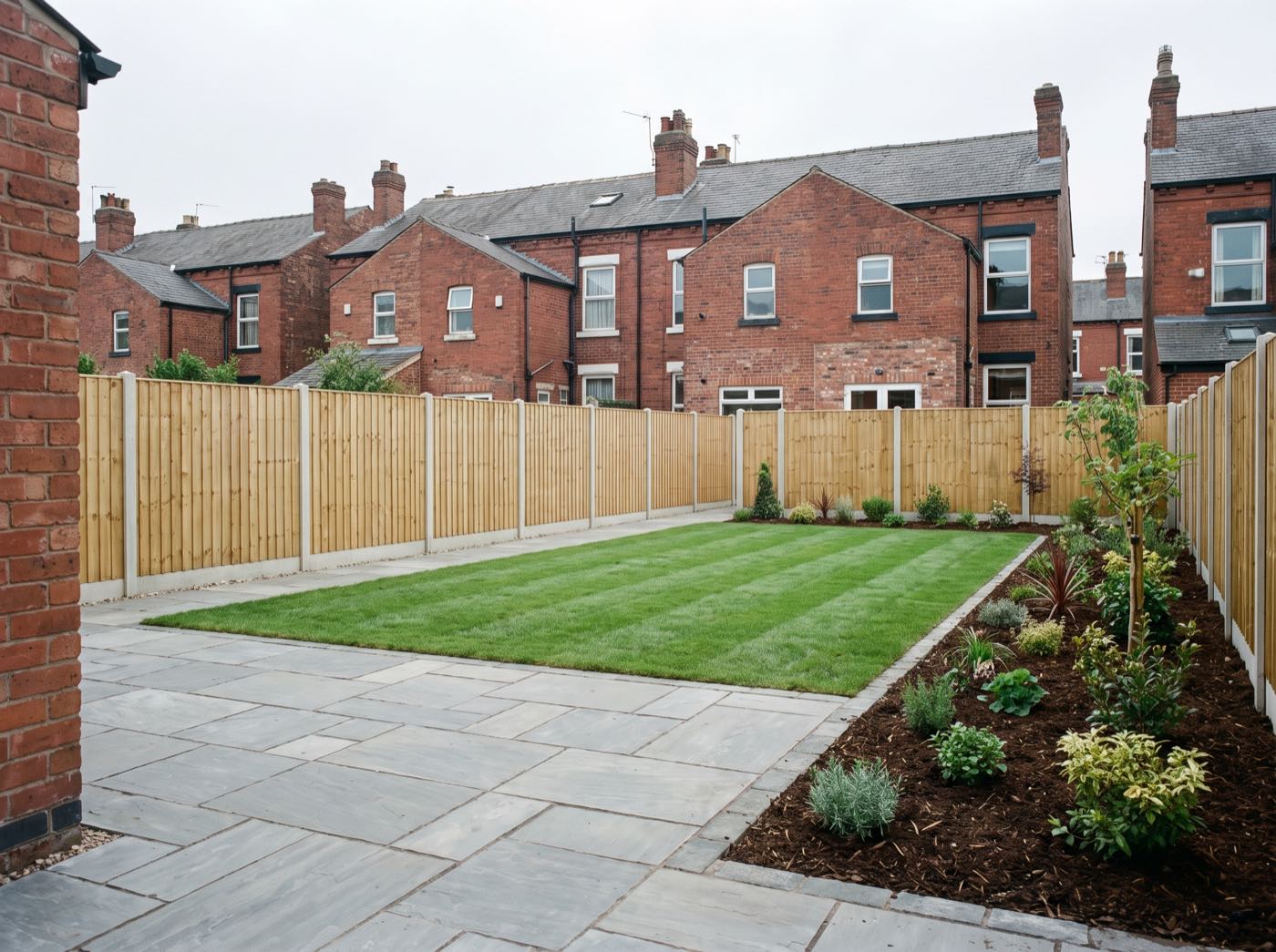
In these streets gardens tend to back directly onto other gardens rather than onto a field or open ground, so the top of the fence matters as much as the bottom. The usual request is to take the overlooking away without turning the garden into a box.
Trellis toppers are the common answer: they lift the height, keep light moving through the garden, and give the wind a way past instead of one solid face.
What the height can be is not ours to decide — it comes out of planning rules, and a boundary fronting a road or footpath is treated differently from one between two back gardens. Anywhere near the limit, the answer comes from Manchester City Council's planning team.
What our fencing work in Manchester includes
- Trellis toppers and feature panels
- Panel and closeboard fencing
- Matching gates and access points
- Posts dug deep and set in concrete
- Gravel boards to protect the timber
- Old fence taken away
Bigger, Opener Boundaries at Wythenshawe
Wythenshawe is a different piece of the same city.
It was laid out as interwar garden-city semis, so the plots are larger and far more open than the terraced streets further in, and a boundary out here is often long, low and visible from the road.
That changes what the fence has to stand up to.
An open plot takes more wind than a sheltered terrace garden, so post depth and spacing carry more of the load, and there is a stronger case for closeboard built board by board onto rails rather than a ready-made panel.
The boundary also sets the look of the frontage, so where the run stops and where the gate goes belong in the decision.
What our fencing work in Manchester includes
- Panel and closeboard fencing
- Trellis toppers and feature panels
- Matching gates and access points
- Posts dug deep and set in concrete
- Gravel boards to protect the timber
- Old fence removed and disposed of
How We Work in Manchester
Initial Enquiry
You get in touch by phone, WhatsApp or the website.
Site Visit
We visit your Manchester property, assess the space, and discuss your ideas.
Recommendations
We suggest the best approach for your budget and requirements.
Detailed Quote
You receive a clear breakdown of the work involved.
Installation
The work is carried out with attention to detail from start to finish.
Completion
You’re left with a fully transformed outdoor space.
Trusted Across Greater Manchester
Our Other Services in Manchester
Landscaping in Manchester
Complete garden landscaping — designed, built and finished to a high standard, with …
Learn moreGarden Renovations in Manchester
Full garden transformations for outdoor spaces that are outdated, difficult to use, or sim…
Learn morePatios & Paving in Manchester
High-quality patios and paving, designed and installed on proper foundations so they stay …
Learn moreDecking in Manchester
Bespoke timber and composite decking — clean, usable outdoor areas built on proper f…
Learn moreArtificial Grass in Manchester
Low-maintenance artificial grass that stays clean, green and usable all year — insta…
Learn moreNearby Areas
That changes what the fence has to stand up to. An open plot takes more wind than a sheltered terrace garden, so post depth and spacing carry more of the load, and there is a stronger case for closeboard built board by board onto rails rather than a ready-made panel. The boundary also sets the look of the frontage, so where the run stops and where the gate goes belong in the decision.
Fencing in Manchester — Your Questions
Our Withington garden is long and the boundary passes three neighbours. Does that change the quote?
It is still one run, but on the visit we work out which stretch belongs to which garden and what is standing on each.
The sections nobody is replacing decide where the new run starts and stops, and that is far easier to agree beforehand than halfway through.
Can the gate onto the back alley be replaced at the same time?
Yes, and doing both together is the better way round, because the posts either side of the opening get dug as part of the same line instead of a gate being hung on something that was never meant to carry it.
Our Wythenshawe semi has an open front boundary onto the road. What can go there?
Front boundaries are where the planning rules bite hardest, because anything facing a road or footpath is treated differently from a fence between two back gardens.
We look at what the rest of the street has done, and anything near the limit is a question for the council.
A mature tree sits right on our Didsbury boundary. Can a fence still go in?
Usually, with the line worked around it.
Post positions can be shifted along the run to miss the main roots, and the boundary can stop and restart where a trunk sits on the line.
What we will not do is dig blind beside an established tree, so it gets looked at on the site visit.
Get a Free Fencing Quote in Manchester
Thinking about fencing for your Manchester garden? Get in touch today for a free, no-obligation quote and honest advice.