
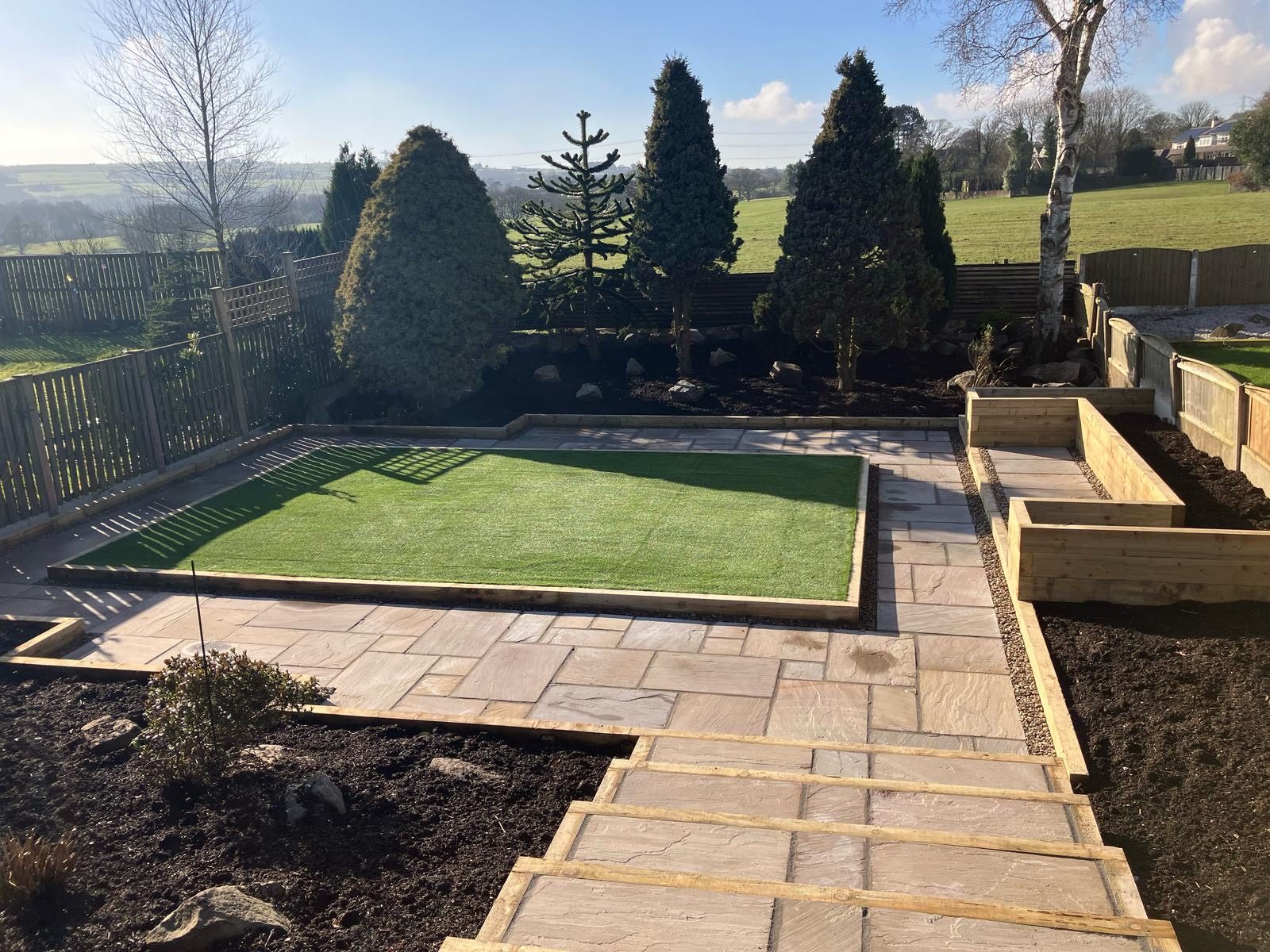
Landscaping in Kearsley
Garden renovations, patios, fencing, decking and lawns in Kearsley — old terraced plots and postwar estate gardens, dug out properly and built back up from the ground.
Get a Fast Response
Tell us a little about your garden and we'll come straight back to you on WhatsApp or by email.
Kearsley Gardens, From the Old Terraces to the Postwar Estates
Kearsley sits about four miles south-east of Bolton on the A666, between Farnworth and the Clifton and Stoneclough side, with Little Lever alongside it and its own railway station. Much of it is former colliery and mill-town terraces, with postwar estate housing built around them.
That history is not just background. In a township that worked for a living, the ground behind the houses has usually had something else on it, and the later estate gardens were laid out quickly on whatever was there when the builders left.
Both need the ground checking before a price goes on the surface.
What Comes Out of the Ground Before Anything Goes In
The first day of a Kearsley job is usually the dig, and the dig is where the surprises live. It is worth knowing what they tend to be before you sign anything.
Rubble rather than subsoil
On old industrial ground a dig often turns up ash, brick and hardcore instead of clean subsoil. It changes how deep you go and how much leaves the site.
Old bases and foundations
Sheds, coal stores and outbuildings leave concrete behind long after the building has gone. Breaking one out is a morning; finding it halfway through is a delay.
Topsoil worth keeping
Where there is decent soil it is worth stripping and putting back rather than carting away and buying it again. That decision is made on the spade, not on the drawing.
Where the water sits after rain
Compacted, made-up ground drains badly, and that shows up as a corner that stays wet for days. It is fixable, but it is a groundwork fix rather than a turf one.
Long Estate Gardens and the Fence Line Down One Side
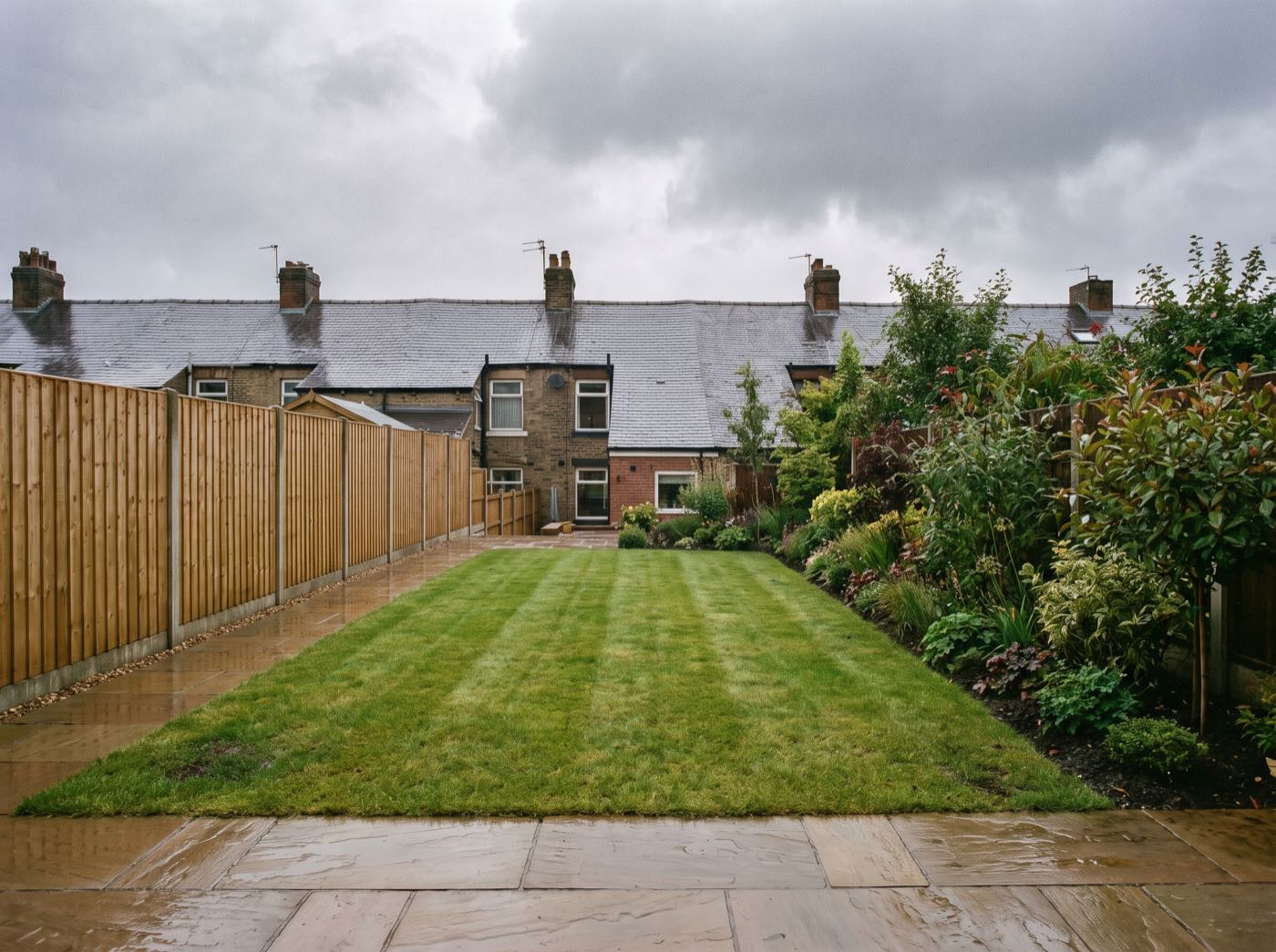
The postwar estates around Kearsley tend to give you length: a strip of garden running away from the house with a fence down one or both sides and very little in the middle of it.
Two things fix that.
The first is breaking the length up so the whole garden is not visible in one glance — a patio near the house, a lawn, then something different at the far end.
The second is the boundary itself, because on a long run the posts do the work, not the panels. Timber posts in old, wet, made-up ground are the usual reason a fence goes over in a gale.
On the older plots the same money is often better spent on clearance first.
Full garden landscaping in Kearsley
Complete redesigns and rebuilds for Kearsley gardens — layout changes, levelling, and new features designed around how the space is actually used.
Patios & paving for Kearsley homes
High-quality patio areas installed on proper foundations — a good way to create usable outdoor space in Kearsley's smaller gardens.
Decking & fencing in Kearsley
Raised and level decking for seating and entertaining — works well as a single defined feature in a compact Kearsley garden — plus closeboard or panel fencing built to last.
Artificial grass in Kearsley
Low-maintenance lawns installed on a proper sub-base — a low-effort way to keep a small Kearsley garden looking neat all year.
A local landscaper who knows Kearsley
We know Kearsley's gardens are often compact, and we design accordingly — practical, tidy and genuinely useful space.
Landscaping Services We Provide in Kearsley
Landscaping Services
Complete garden transformations from layout to finish, designed and built properly.
Learn moreGarden Renovations
Reworking outdated, damaged or difficult gardens from the ground up.
Learn morePatios & Paving
High-quality paving areas for seating, access and outdoor living.
Learn moreDecking
Timber or composite decking for raised or feature areas within the garden.
Learn moreFencing
Strong, clean and professionally installed fencing for privacy and structure.
Learn moreArtificial Grass
Low-maintenance lawn alternatives that stay clean and usable all year round.
Learn moreOur Landscaping Process
Initial Enquiry
You get in touch via phone, WhatsApp or the website.
Site Visit
We visit your Kearsley property, assess the space, and discuss your ideas.
Recommendations
We suggest the best approach based on your budget and requirements.
Detailed Quote
You receive a clear breakdown of the work involved.
Installation
The work is carried out with attention to detail from start to finish.
Completion
You're left with a fully transformed outdoor space.
Trusted by Homeowners in Kearsley
Landscaping Around Kearsley
Farnworth shares the BL4 postcode with Kearsley, Little Lever sits alongside, and Stoneclough and Clifton are further down the A666.
Our landscaping in Farnworth page covers the other half of BL4 and the Little Lever page the ground towards Radcliffe.
If the lawn is the part you care most about, lawn installation explains how the ground is put right before any turf is laid.
Kearsley – Your Questions
We are in the older part of Kearsley off the A666. What usually turns up when the garden is dug out?
On ground with an industrial past, often more hardcore than soil — ash, brick, bits of old path and the base of something that used to stand there.
It is workable, but it affects how much is carted away and how much clean material comes back in, so it is checked on the site visit.
Our garden falls away from the back door. Is that a patio job or a decking job?
It depends how much the ground drops and what is under it.
Paving a slope means cutting into it and holding the higher side, or building the low side up, and on made-up ground that has to be done properly.
Decking can bridge a fall on a frame instead, which is sometimes the less disruptive answer. Measuring the drop settles it.
The fence panels on our estate garden keep coming down. Is that the panels or the posts?
Nearly always the posts, or what the posts are standing in.
A long boundary catches a lot of wind and a timber post set shallow in soft ground will work loose before the panel fails.
Replacing panels onto the same tired posts is money spent twice.
There is an old brick outbuilding and a concrete base at the bottom of the garden. Can they go?
Usually, and clearing them is often what makes the rest of the design possible.
Two things get checked first: whether the structure is holding back ground or supporting a boundary wall, and what the roof is made of, because older sheds and outbuildings can have cement-asbestos sheeting that has to be dealt with under its own rules rather than thrown in a skip.
Need a Landscaper in Kearsley?
Send an enquiry with a short description of the job and we'll reply with the next steps.