
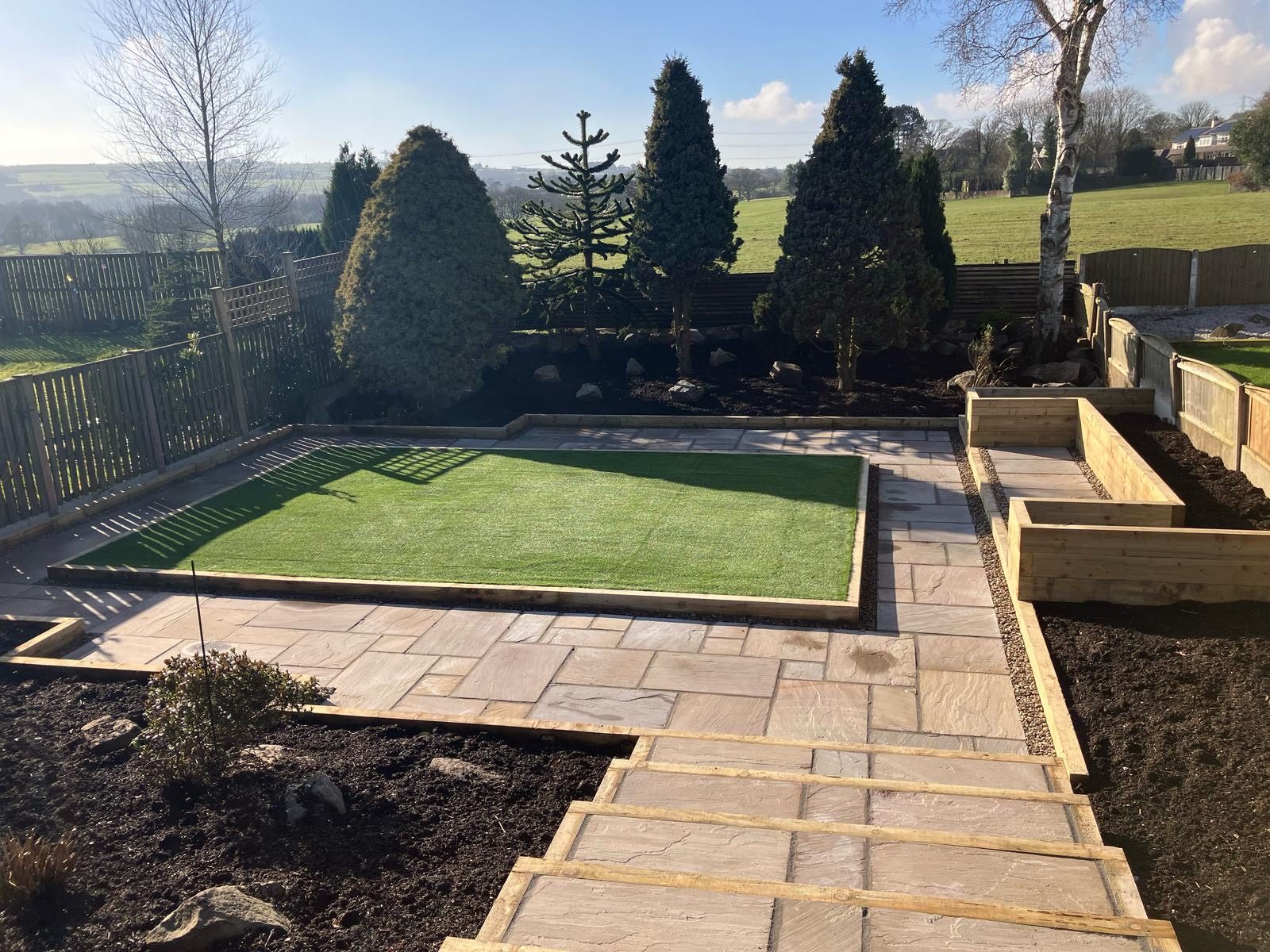
Landscaping in Leigh
Garden landscaping, patios, decking, fencing and lawns for Leigh gardens, with the levels and the drainage settled first. Free, no-obligation quotes.
Get a Fast Response
Tell us a little about your garden and we'll come straight back to you on WhatsApp or by email.
Gardens on Leigh’s Low Ground
Leigh sits about seven miles south-west of Bolton, on low ground at the edge of the mosses and the flashes, with Pennington Flash just south of the town.
The whole WN7 area is flatter and wetter than the ground we work on closer to Bolton, and that is the single fact that shapes most gardens here.
On ground that holds water, a patio, a lawn or a deck laid before the falls are right is a problem waiting for the first wet winter. Get the ground and the water right first and everything built on top of it has a fair chance.
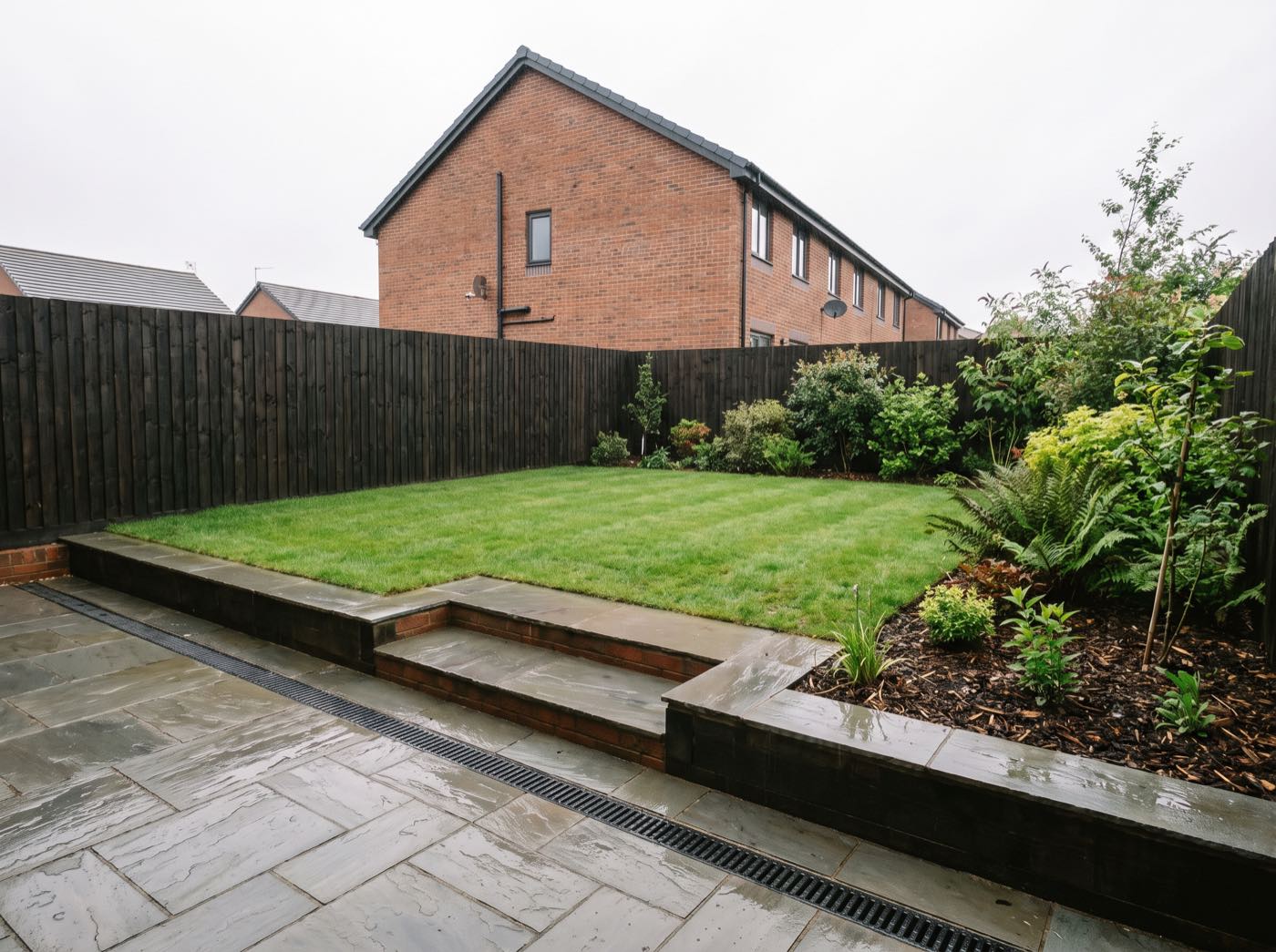
Where the Water Goes Before Anything Is Decided
A lawn that stands in water is almost never a grass problem.
It is one of three things: the ground falls the wrong way, the water has nowhere to go once it arrives, or what is underneath has been compacted until it stopped taking anything.
Which one it is decides whether the answer is re-grading, a drainage run, or digging out and rebuilding the ground properly — and the three cost very different amounts.
Pennington, Bedford and the Estates on Reclaimed Ground
Much of Pennington and Bedford is cotton- and coal-era terraces, with interwar and post-war semis spread around them and newer estates south of the town on reclaimed colliery and mossland ground.
Terrace plots in Pennington and Bedford
Older back plots usually have layers of previous surfaces under the current one. Taking those out and rebuilding the ground is what stops a new patio going the same way.
Semis with a lawn that never dries
Where a lawn has given up on wet ground, the choice is new turf with the ground put right first, or artificial grass on a permeable sub-base. Both need the falls fixing either way.
Newer estates on reclaimed land
Plots on reclaimed colliery and mossland often start as bare topsoil over ground that was machined flat. Levels, sub-base and where water is going to run come before any design.
Decking and raised areas on flat, wet plots
On ground that sits damp, a deck built on proper foundations lifts the usable space clear of the wet and gives a flat area without importing tonnes of fill.
Full garden landscaping in Leigh
Complete redesigns and rebuilds for Leigh gardens — layout changes, levelling, and new features designed around how the space is actually used, whether that's a town-centre terrace or a larger plot out towards Pennington.
Patios & paving for Leigh homes
High-quality patio areas built on proper foundations — suited to Leigh's mix of period terraces and larger family homes.
Decking & fencing in Leigh
Raised and level decking for seating and entertaining, plus closeboard or panel fencing built to last.
Artificial grass in Leigh
Low-maintenance lawns installed on a proper sub-base — a practical option for busy Leigh households wanting a tidy lawn without the upkeep.
A local landscaper who knows Leigh
Whether you have a clear plan for your Leigh garden or just know it needs work, we'll guide you through the options honestly — for your space, your budget and your home.
Landscaping Services We Provide in Leigh
Landscaping Services
Complete garden transformations from layout to finish, designed and built properly.
Learn moreGarden Renovations
Reworking outdated, damaged or difficult gardens from the ground up.
Learn morePatios & Paving
High-quality paving areas for seating, access and outdoor living.
Learn moreDecking
Timber or composite decking for raised or feature areas within the garden.
Learn moreFencing
Strong, clean and professionally installed fencing for privacy and structure.
Learn moreArtificial Grass
Low-maintenance lawn alternatives that stay clean and usable all year round.
Learn moreOur Landscaping Process
Initial Enquiry
You get in touch via phone, WhatsApp or the website.
Site Visit
We visit your Leigh property, assess the space, and discuss your ideas.
Recommendations
We suggest the best approach based on your budget and requirements.
Detailed Quote
You receive a clear breakdown of the work involved.
Installation
The work is carried out with attention to detail from start to finish.
Completion
You're left with a fully transformed outdoor space.
Trusted by Homeowners in Leigh
Landscaping Around Leigh
Leigh runs north into Atherton and Tyldesley, east towards Astley, south-west to Lowton and Golborne, and west towards Hindley, with Pennington and Bedford as districts of the town itself.
We cover all of it from Bolton. Our Bolton landscaping service explains how a full garden build is put together, and landscaping in Atherton covers the next town north.
Leigh – Your Questions
Our garden in Pennington stands in water every winter. Can landscaping fix that?
Usually, but only once we know why it is happening. Flat, low-lying ground gives water nowhere to go, and on top of that the soil underneath is often compacted solid.
The fix is re-grading, drainage, rebuilding the ground, or a combination — and which it is changes the job completely, so it is settled at the site visit rather than guessed at.
We are on one of the newer estates south of Leigh, built on old colliery land. Does that change how the ground is prepared?
It means we assume less. Reclaimed ground has been worked and levelled by machine, so what is a few inches down is not always what the surface suggests.
We open it up and look before setting levels or laying a sub-base, which is slower on day one and much cheaper than finding out afterwards.
Does being close to Pennington Flash and the mosses affect what can be built?
It affects how, not what.
Ground at that end of the town holds water, so surfaces need falls that actually take it somewhere, sub-bases need to drain rather than hold, and fence posts go into wetter ground than they would higher up.
All of that is normal here — it just has to be built in from the start.
Our new plot is bare topsoil and nothing else. What comes first?
Levels and boundaries. Deciding where the ground sits, where water leaves and where the edges are gives everything else something to work to.
Patio, lawn and planting then go in against a plan instead of being fitted round whatever the builder left, which is the main advantage of starting from an empty plot.
Need a Landscaper in Leigh?
Send an enquiry with a short description of the job and we'll reply with the next steps.