
Landscaping in Westhoughton
Garden landscaping, patios, decking, fencing and lawns across Westhoughton and BL5 — estate gardens whose first layout has worn out, and older plots behind the terraces near the centre.
Get a Fast Response
Tell us a little about your garden and we'll come straight back to you on WhatsApp or by email.
A Town Spread Out Along the A58, Four and a Half Miles From Bolton
Westhoughton sits in BL5, about four and a half miles south-west of Bolton town centre, with the A58 running through it towards Wigan, the A6 close by and two railway stations on hand, Westhoughton and Daisy Hill.
It grew as a mining town, and the housing shows the sequence. Much of the older core is Victorian terraces; around them are postwar estates, and newer estate building again beyond those.
Most of the work asked about here is neither a bare plot nor a period garden: it is a garden laid out fifty or sixty years ago that has come to the end of what it was built for.
When a Garden's First Layout Has Worn Out
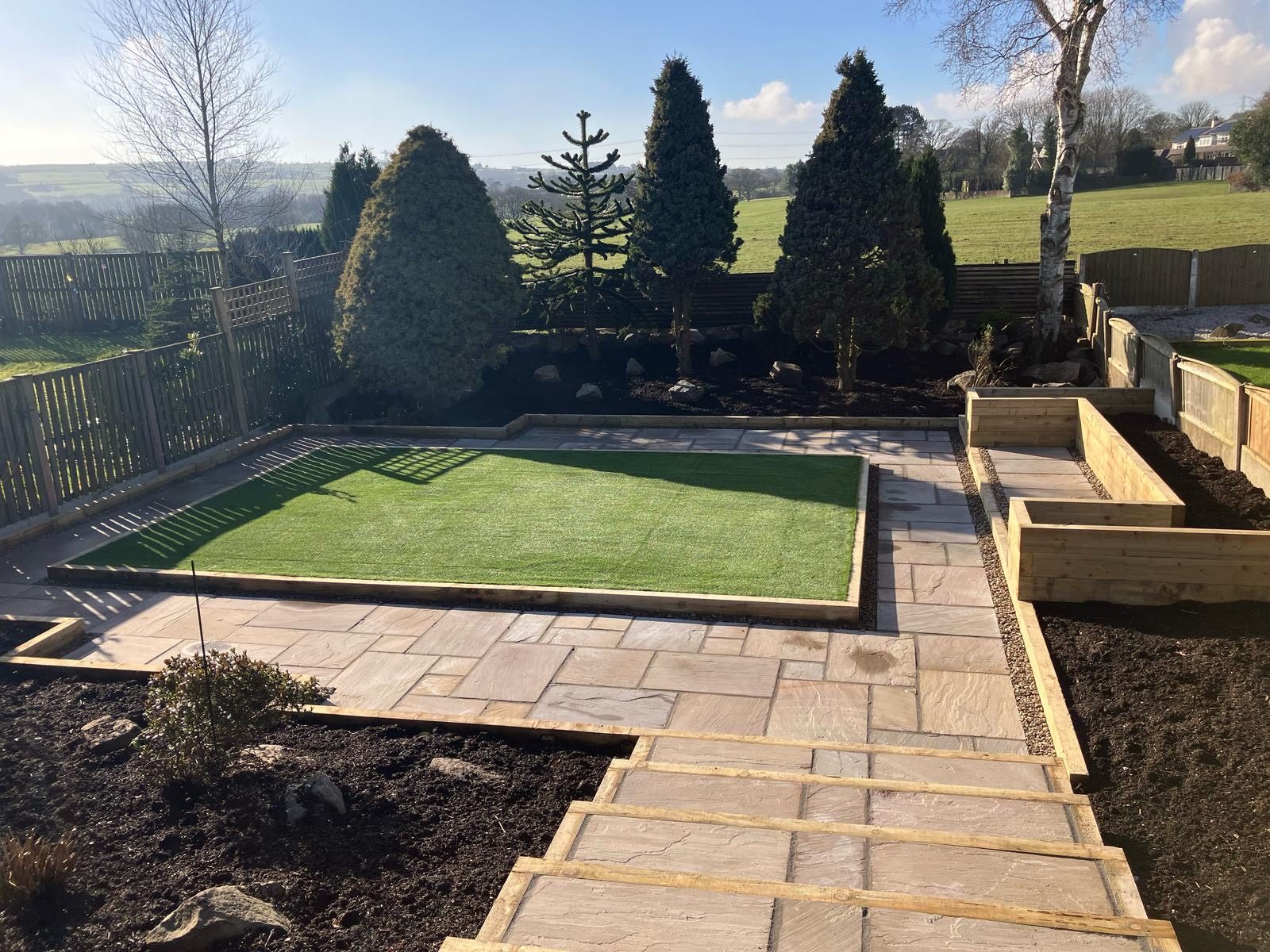
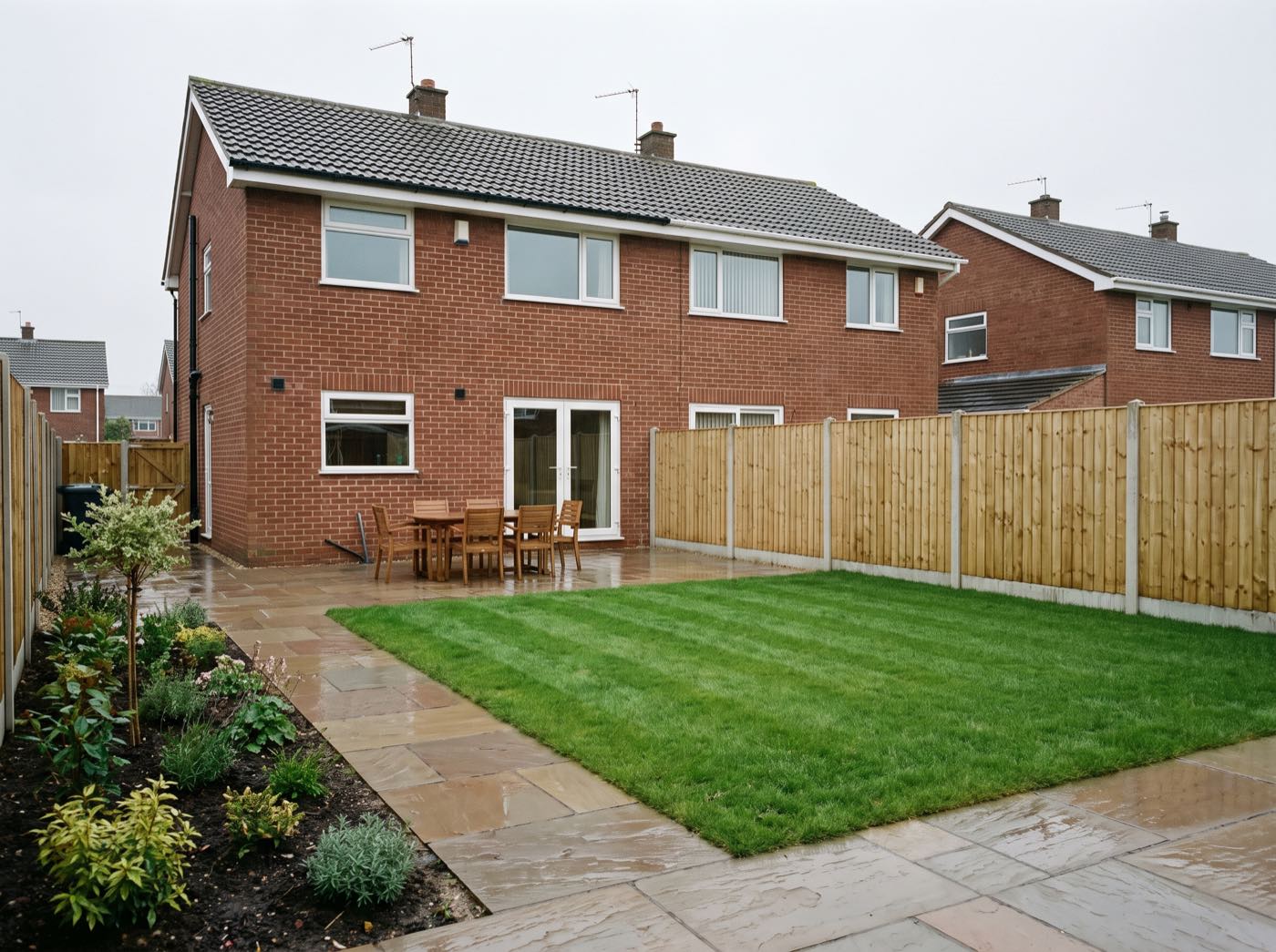
A postwar estate garden was usually built once, properly for its day, then left to get on with it: a concrete path down the middle, a small slab patio, a privet or panel boundary and a lawn.
Fifty years on each part fails differently, and the temptation is to patch them one at a time rather than work out which are still doing a job.
Slabs laid on sand and hope
A patio that rocks, puddles and grows weeds in every joint has lost its base rather than its slabs. Relaying on the same ground buys a season or two.
Posts that have outlived the fence
Where one panel has gone, the posts either side are the same age. A whole run done once costs less than three visits over three winters.
A lawn that is mostly moss
Moss is a symptom: shade, compaction or water with nowhere to go. Feeding and reseeding treats the grass, not the reason it gave up.
The path down the middle
It was put in for a coal shed, a washing line and a different way of living. It splits the garden in two, and taking it out often gains more than anything else.
What comes out before anything goes in
Old concrete, a shed base and a dead hedge have to be broken out and carried away before the new garden starts, and on a renovation that is a real part of the work.
Long, Narrow Plots Behind the Older Terraces
The Victorian streets nearer the centre hand you a different problem: a plot far longer than it is wide, a boundary shared with next door, and generations of previous surfaces stacked under the grass.
A long thin garden works best broken into more than one space rather than treated as a corridor, so the far end has a reason to be walked to.
That means deciding where the seating goes before deciding what it is made of, and dividing the spaces with planting or a low boundary rather than another straight path.
Digging in a garden that has been a garden for a hundred years turns things up. Old flags, brick and the odd forgotten base are common, and they change how much comes out before anything goes in — a cost and a day count rather than a disaster.
Full garden landscaping in Westhoughton
Complete redesigns and rebuilds for Westhoughton gardens — layout changes, levelling, and new features designed around how the space is actually used.
Patios & paving for Westhoughton homes
High-quality patio areas installed on proper foundations — a strong starting point for Westhoughton's newer estate gardens.
Decking & fencing in Westhoughton
Raised and level decking for seating and entertaining — popular on Westhoughton's larger new-build gardens for a defined entertaining area — plus closeboard or panel fencing built to last.
Artificial grass in Westhoughton
Low-maintenance lawns installed on a proper sub-base — a practical choice for busy Westhoughton families wanting a low-maintenance lawn.
A local landscaper who knows Westhoughton
Whether you're starting from a blank new-build garden or updating an older one, we'll help you plan a Westhoughton garden that works for how you actually use it.
Landscaping Services We Provide in Westhoughton
Landscaping Services
Complete garden transformations from layout to finish, designed and built properly.
Learn moreGarden Renovations
Reworking outdated, damaged or difficult gardens from the ground up.
Learn morePatios & Paving
High-quality paving areas for seating, access and outdoor living.
Learn moreDecking
Timber or composite decking for raised or feature areas within the garden.
Learn moreFencing
Strong, clean and professionally installed fencing for privacy and structure.
Learn moreArtificial Grass
Low-maintenance lawn alternatives that stay clean and usable all year round.
Learn moreOur Landscaping Process
Initial Enquiry
You get in touch via phone, WhatsApp or the website.
Site Visit
We visit your Westhoughton property, assess the space, and discuss your ideas.
Recommendations
We suggest the best approach based on your budget and requirements.
Detailed Quote
You receive a clear breakdown of the work involved.
Installation
The work is carried out with attention to detail from start to finish.
Completion
You're left with a fully transformed outdoor space.
Trusted by Homeowners in Westhoughton
Landscaping Around Westhoughton
Daisy Hill and Chequerbent sit alongside the town, Blackrod is north towards Horwich, and west along the A58 the ground crosses into Wigan borough at Hindley and Aspull.
Bolton, where we are based, is four and a half miles the other way.
Our lawn installation page explains how new turf is laid with the ground put right underneath it, and landscaping in Blackrod covers the next place north.
Westhoughton – Your Questions
Our patio is original to the house and it rocks and puddles. Can it be relaid rather than replaced?
Sometimes the slabs themselves are sound and can be lifted and reused, which is worth checking before anything is ordered. What rarely survives is the base.
If it was bedded on sand or on five dabs of mortar, the ground underneath has to be dug out and rebuilt, or you will have the same rocking slabs again in a couple of winters.
Do you cover Daisy Hill and Chequerbent as well as Westhoughton itself?
Westhoughton is on our covered list, and that takes in the areas around it, Daisy Hill and Chequerbent included, along with Blackrod to the north.
West of the town the boundary runs into Wigan borough at Hindley and Aspull, which we also cover. If you are unsure, just ask.
Our garden behind one of the older terraces is long and narrow. What can realistically be done with a shape like that?
Quite a lot, as long as it is not treated as one long corridor.
Breaking it into two or three spaces, with something to walk towards at the far end, makes a narrow plot feel wider than a path up the middle does.
The limit is usually access rather than design — how materials get in and spoil gets out.
Westhoughton is an old mining town. Is that a problem for foundations and drainage?
Not something anyone should answer from a map.
What is under your garden is found out when the ground is opened, and a plot dug, built on and filled over many decades can turn up anything from old flags to a forgotten base.
If something unexpected appears, the honest thing is to stop, show you and price the extra work before carrying on.
Need a Landscaper in Westhoughton?
Send an enquiry with a short description of the job and we'll reply with the next steps.